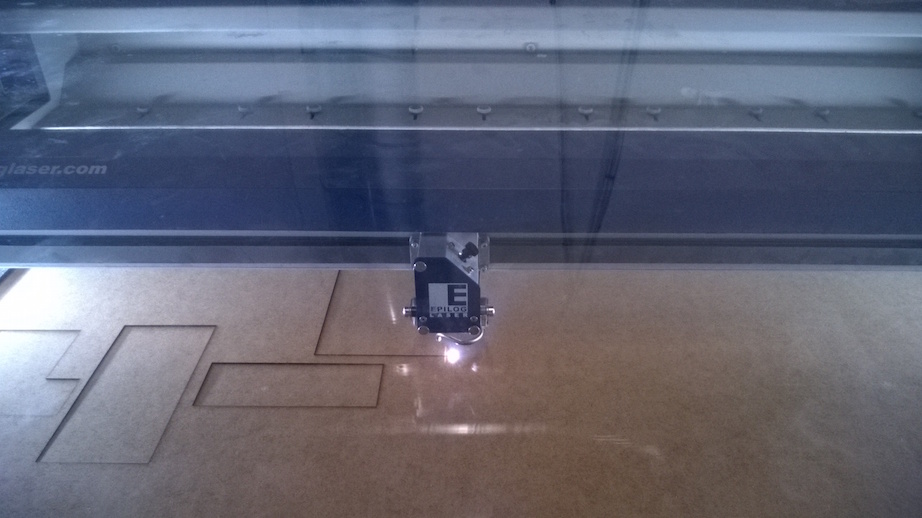
During a recent course in interaction design research at Aalborg University Department of Architecture Design and Media Technology, I had my first encounter with a laser cutter. Here I was introduced to some of the many possibilities offered by this relatively simple technology.
In essence, a laser cutter is a high-power laser burning melting the material like a saw. A strength of this technique is the variety of different types of materials that can be used such as wood, cardboard, plastic, acrylic, and fabric. Another strength is the precision of the cutting making it possible to get clean and sharp edges. Laser cutters are still not at a price level making it possible for most people to get one at home, but several universities and workshops make them available to students and the public.
In simple terms, a laser cutter almost works like an ordinary printer – model something in a modelling program and send it to the laser cutter.

During this introduction, I used the modelling program Skatechup Make by Sketchup. Sketchup Make is the light version of Sketchup Pro and is available as freeware for non-commercial use and a great way to learn and experimenting with modelling programs and creating sketches for laser cutting. It turned out to be relatively easy and fast to learn the basic concepts of Sketchup Make. After a couple of hours of introduction to both laser cutting and Sketchup, I was able to make different simple shapes and to prepare them for laser cutting.
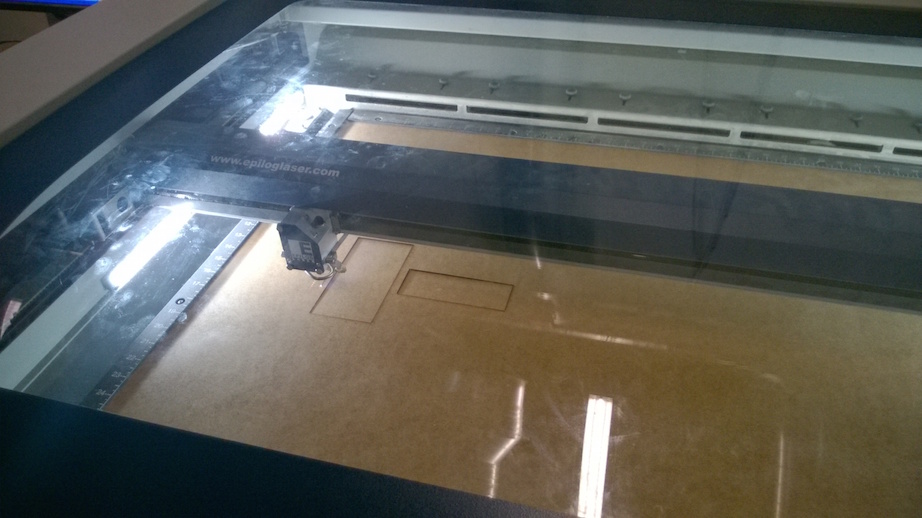
While I was only able to make some simple shapes during my first trial, it’s easy to get hooked and see a potential. With a bit of creativity, it is possible to make 2D models into 3D models by creating 2D parts and afterwards assemble the parts into something 3D. While I didn’t get so far during my first encounter, it is to easy to see why laser cutting is a cheap, fast, and easy tool for rapid prototyping of physical devices. Laser cutting is a very compelling and attractive technique, so I hope to get the chance to play further with this technology and even use it for one of my projects.